
29.08.2025
The Timeless Language of Accessories
Photo from Vogue with kind permission.
29.08.2025
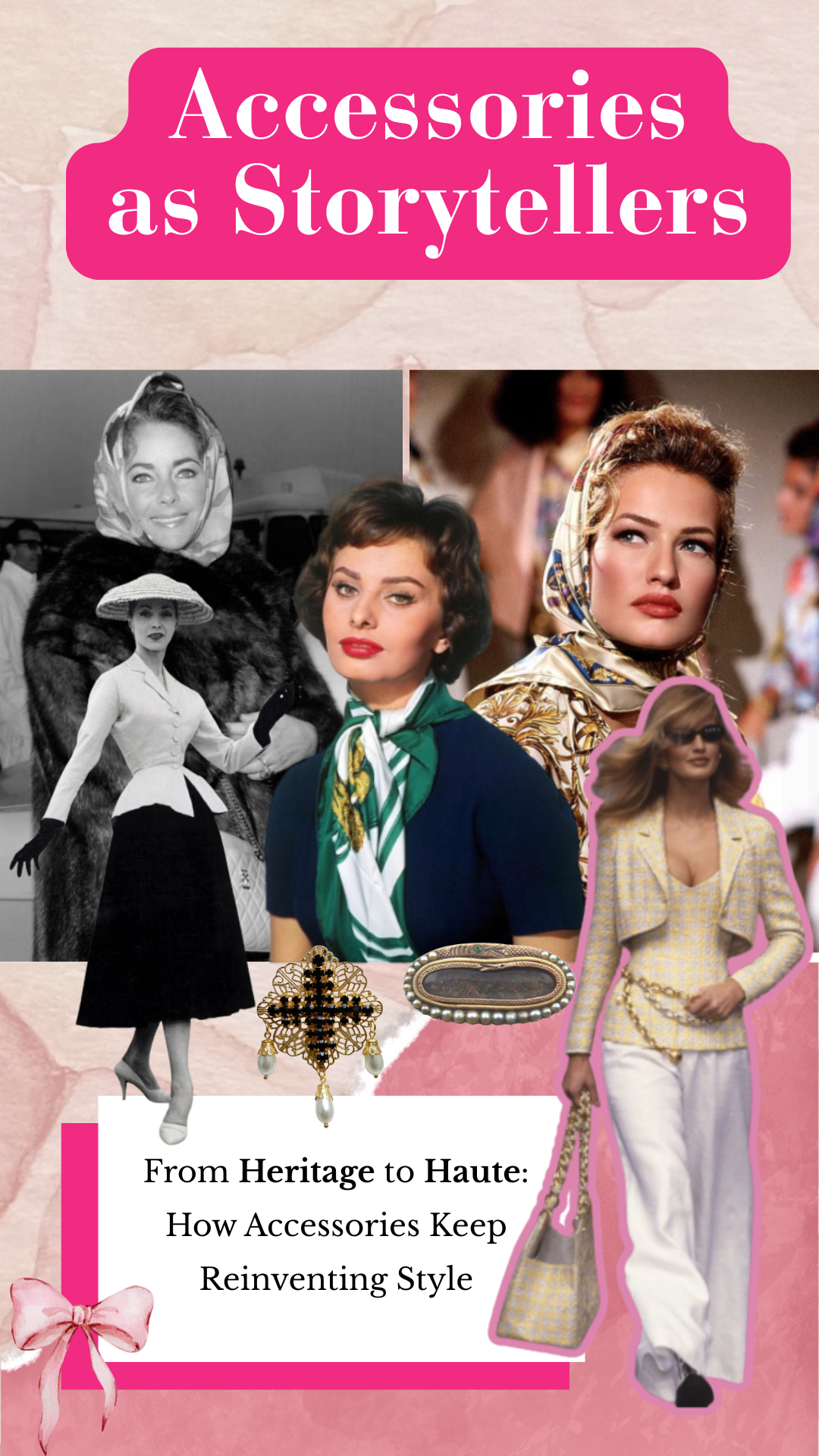
Photo from Vogue with kind permission.
Accessories have always been more than just finishing touches, they are Powerful Storytellers.
A scarf tied just so, a belt cinched at the waist, or a brooch catching the light: each carries centuries of tradition, creativity, and personal expression.
At AN, we love exploring the journey of these versatile icons, from their historical roots to the way celebrities and modern fashion keep reinventing them.
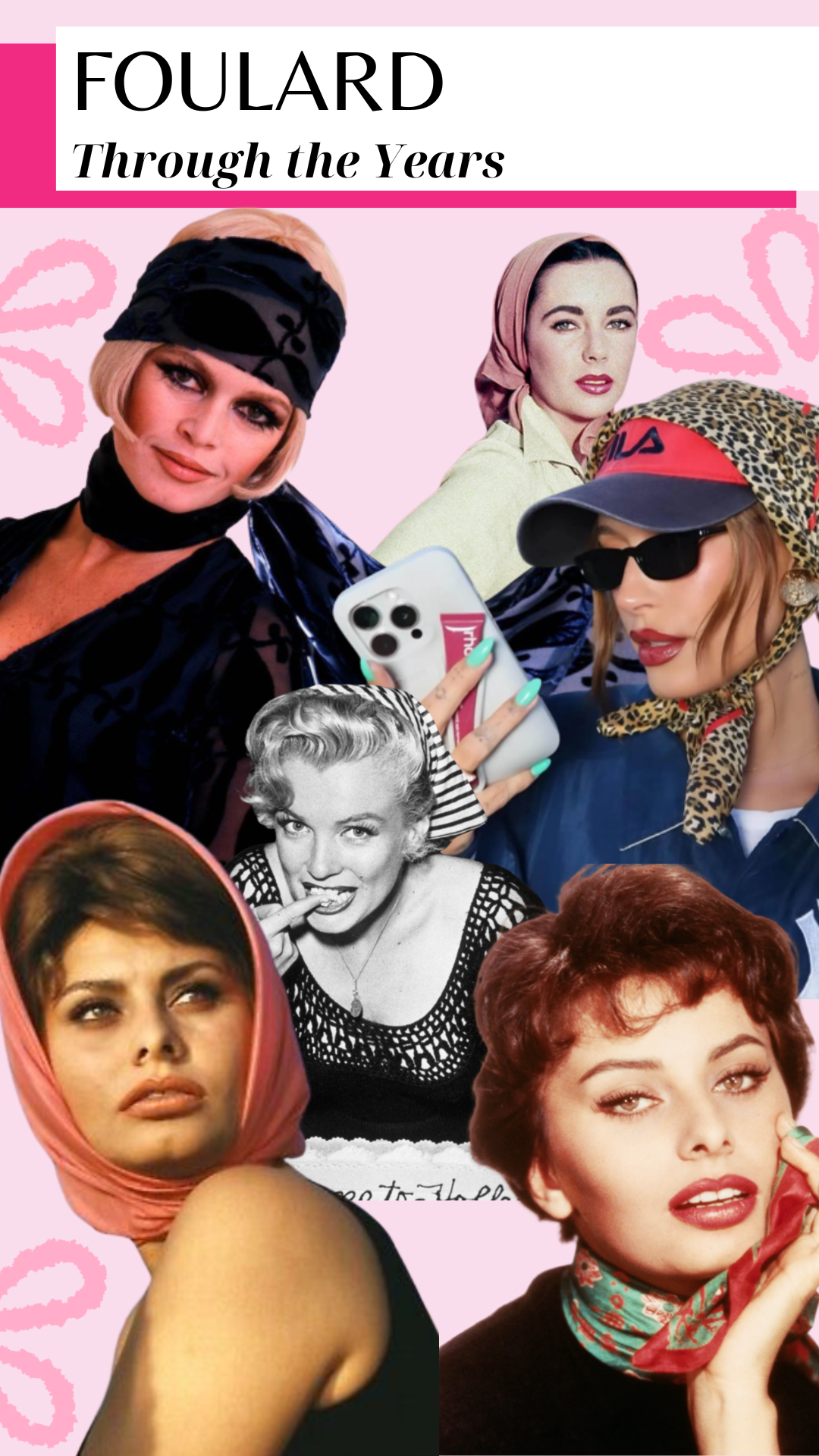
Photo from Vogue with kind permission.
The word Foulard comes from French, meaning “lightweight silk.” It became a chic symbol in the 19th century, worn by both men and women.
Few accessories have enjoyed such Hollywood glamour. Grace Kelly famously turned her Hermès scarf into a sling for her broken arm in 1956, making it an instant legend. Audrey Hepburn tied hers for elegant city strolls, Elizabeth Taylor wore hers boldly, Sophia Loren infused Italian Riviera allure, and Brigitte Bardot made it playful and romantic.
Today, silk scarves are styled in endless ways: as chic headpieces, belts, bag accents, or neck ties. And celebrities are still embracing this timeless trend, from Hailey Bieber’s modern chic styling to Sabrina Carpenter’s playful Feminine Touch, proving that the foulard remains forever relevant.
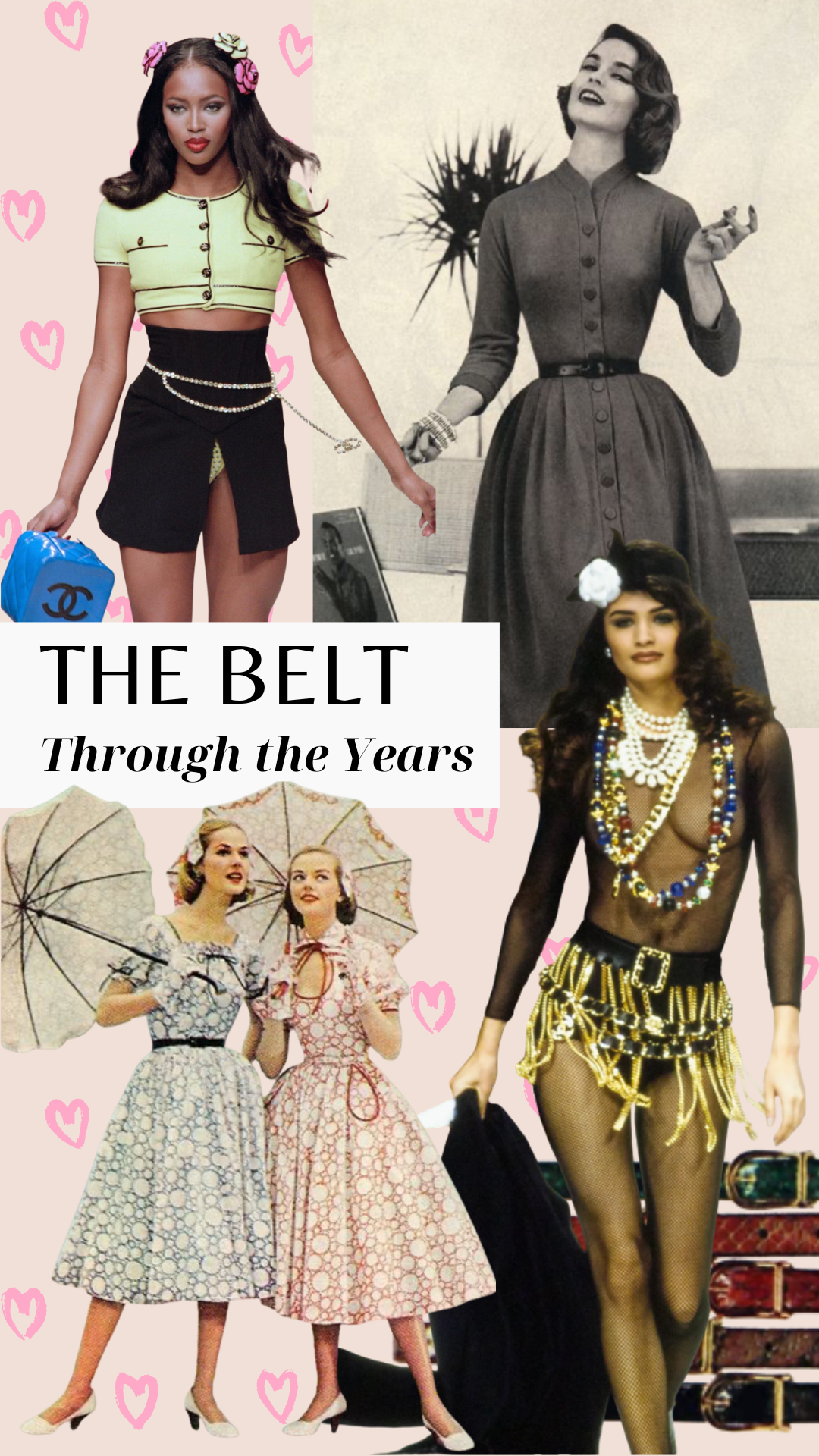
Photo from Vogue with kind permission.
Once purely functional, belts became a fashion statement in the 1920s, often crafted in the same fabric as the dress. The dropped-waist era gave us loose belts slung at the hips.
By the 1950s, the belt was crowned as the ultimate waist-definer, wide and cinched, sculpting the hourglass figure. The 1960s added playful colors and patterns, while the 1970s leaned into bohemian ease. Then came the power belts of the 1980s, bold buckles layered over sharp tailoring.
The 1990s went minimalist with skinny belts, while the 2000s loved Y2K rhinestone-studded belts and dramatic corset shapes.
Today, belts are back in the spotlight. The corset belt trend has re-emerged, worn over suits or dresses for bold silhouettes, while the multiple belts styling, made famous by Bella Hadid, adds an edgy, layered street-style twist.
Vintage and statement belts are once again center stage, showing just how adaptable this accessory remains.
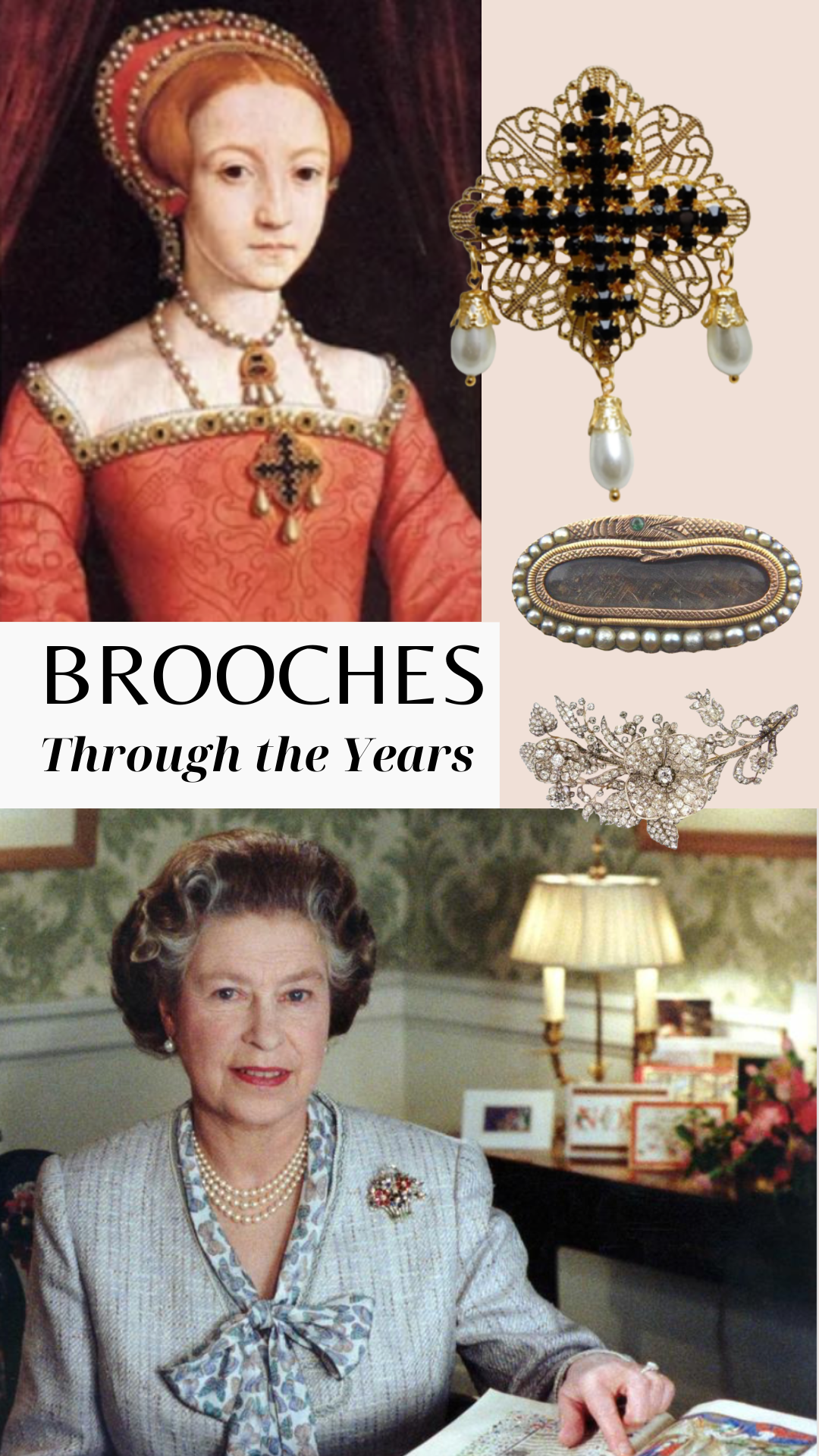
Photo from Vogue with kind permission.
The brooch began as a practical pin in the Bronze Age, later evolving into decorative pieces in Celtic and Viking cultures.
By the 17th century, brooches shimmered in candlelight with feather-shaped aigrettes and en tremblant settings that moved delicately on springs.
In the 18th and 19th centuries, brooches became sentimental tokens, mourning brooches often held hair or portraits of loved ones, with pearls symbolizing tears. Queen Victoria set the tone for this fashion across Europe.
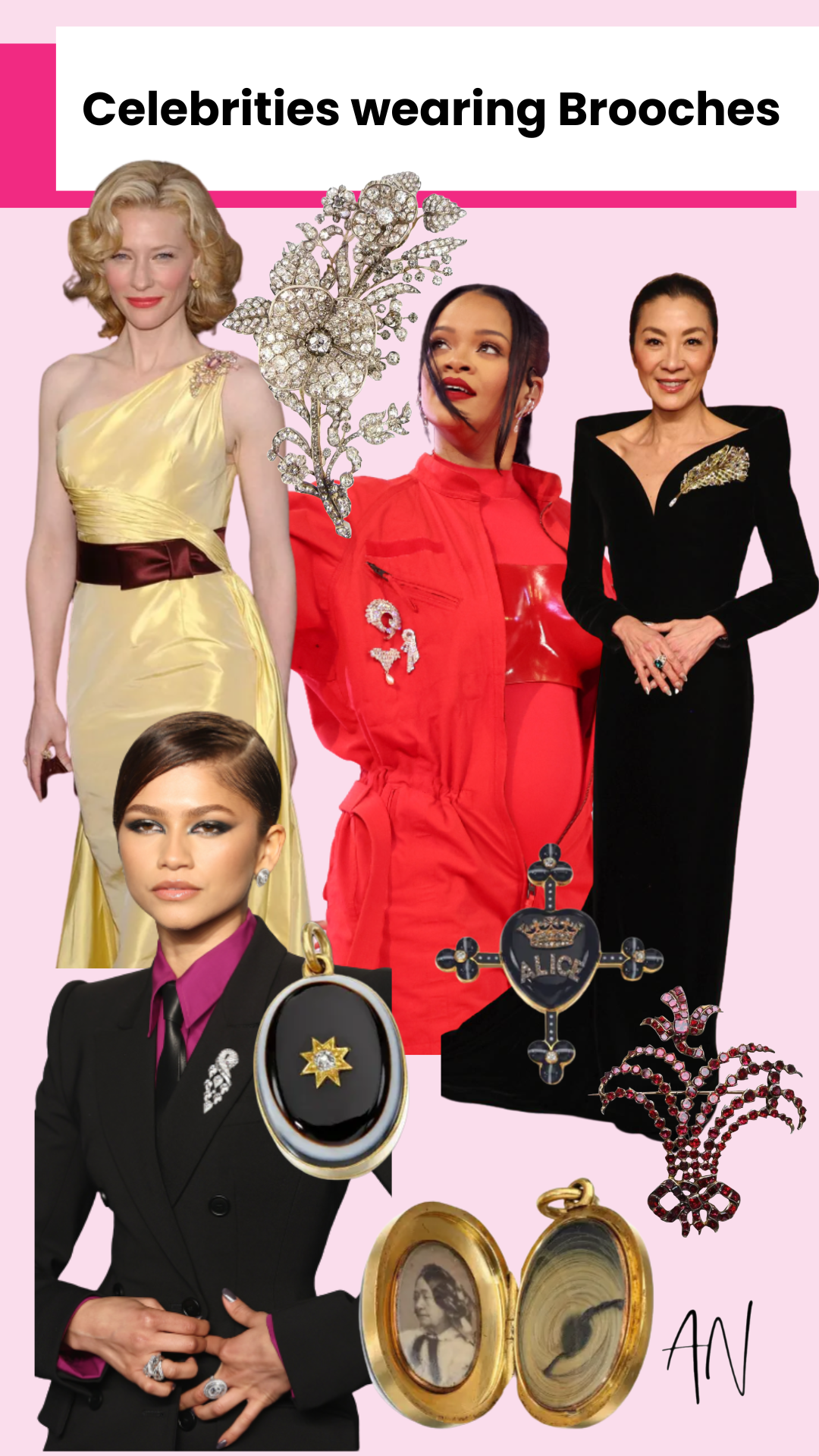
Photo from Vogue with kind permission.
In modern history, Queen Elizabeth II elevated the brooch to an art of diplomacy. Each piece she wore carried symbolism, from commemorating anniversaries to honoring state visits. Her collection became a quiet yet powerful language of style.
Today, celebrities like Zendaya and Cate Blanchett showcase brooches in fresh, dramatic ways, proving that this classic accessory is as relevant as ever.
Foulards, belts, and brooches remind us that accessories are not afterthoughts, but defining elements of Personal Style. They adapt, evolve, and continue to inspire across decades , bridging history with today’s fashion moments.
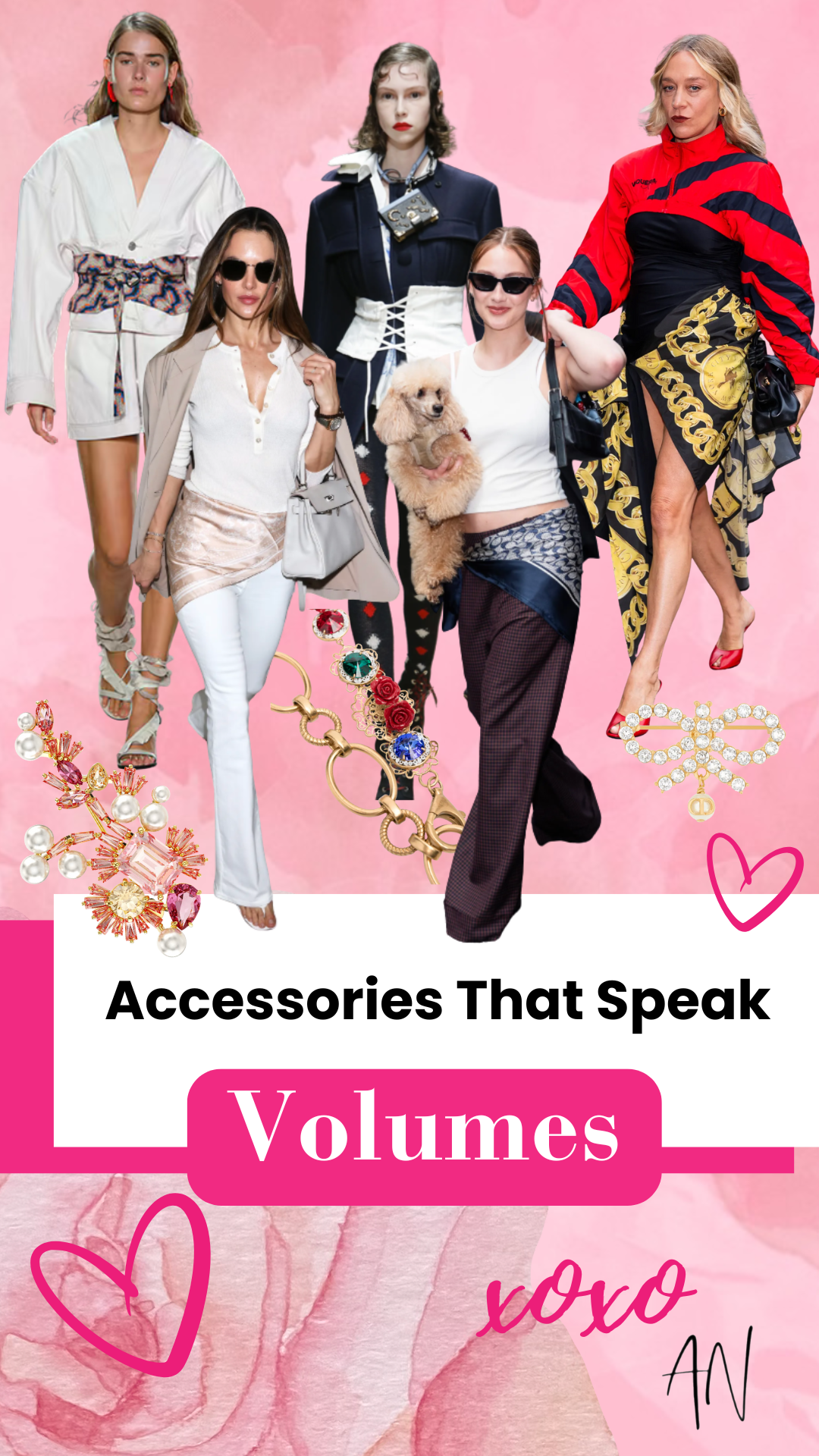
Photo from Vogue with kind permission.
29.08.2025
Photo from Vogue with kind permission.

01.05.2024
Photo from Vogue with kind permission.

15.12.2023
Out-of-the-Box Christmas Gift Ideas for Your Hard-to-Please Loved Ones